

It was announced recently that NASA has decided to push the launch of its Space Launch System (SLS) to September 27. This was following a second failed launch attempt of the SLS on 3 September. This rocket is NASA’s most powerful to date but was unable to launch earlier this month due to a leak of hydrogen fuel.
The Space Agency now says it will be performing fuel tests on the SLS rocket, which includes a “kick-start bleed test” in which the four engines of the rocket are cooled to a subfreezing -420 degrees Fahrenheit (-250C). This test aims to, in NASA’s words, “validate the ground and flight hardware and software systems” ensuring that the rocket can function in the subfreezing temperatures it must undergo during its mission.
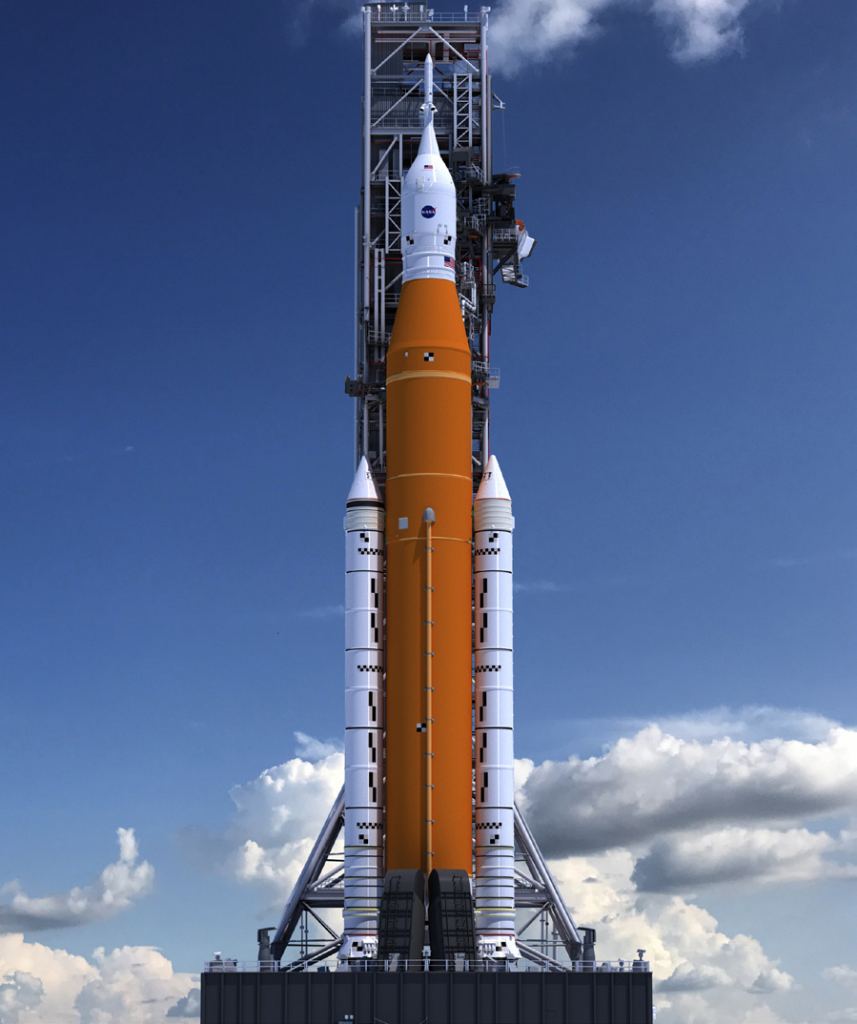
But what is the SLS, and why is NASA so keen to launch it?
Well, this launch is only one phase of NASA’s Artemis project. A project promised to be this generation’s equivalent of the Apollo missions of the 1960s and 70s. NASA is hoping to help usher in a new age of lunar exploration. The job of the SLS is to provide the groundwork for Artemis, launching an unmanned test capsule – Orion – so it can orbit the moon before returning to Earth.
This project however is not limited to the moon. The mission to get people back on the moon is hoped to provide a basis for future flights to Mars which may take place in the 2040s (although Elon Musk intends to launch a manned Mars mission in 2024).
Nevertheless, the Artemis Project will mark a momentous occasion as humans return to the moon for the first time in 50 years (the last time was achieved by Apollo 17 in 1972 with Gene Cernan and Harrison Schmitt being the last moonwalkers in half a century). Although NASA makes it clear that the Artemis project will not be a rehash of its 1960s twin. Some of the firsts for the project will be: sending the first woman and the first person of colour to the Moon, to inspire a wider interest in space exploration; establishing a community on the lunar surface, as a model for Mars, and showcasing new technologies to further study the Moon’s surface.
Although, since NASA’s recent launch failures, SpaceX has successfully sent its Falcon 9 reusable rocket on its 14th mission. The rocket launched on September 10, deploying Starlink satellites as a part of the company SpaceMobile’s space-based broadband network. As far as some critics are concerned, SpaceX goes from strength to strength whereas NASA faces constant delays. Then, let’s not also forget Jeff Bezos’s Blue Origin. The Amazon founder’s own space company launched an unmanned rocket on 12 September, which unexpectedly malfunctioned mid-flight.
One thing that these recent launches do make clear is the ever-increasing influence of privately owned space companies. Companies with plans for grand Mars missions and commercial space flight and stubborn in their ambition. Let’s not also forget that SpaceX has been a key collaborator in NASA’s Artemis Project, designing the human landing system to safely return astronauts to Earth.
Recent events have caused other criticism towards NASA’s project. Some criticism has been at the project’s costs, $4.1 billion per successful launch with the project totalling $93 billion in costs (estimated up until 2025).
Is the expense worth it? Do the enthralling prospects of this mission outweigh the costs to a government that collects trillions of dollars each year? Or should we stay focused on solving the many current Earth-bound problems we are faced with?
If NASA’s recent scrapped launches have shown anything it’s that the success of this mission will be essential for the future of this project. Sending this rocket to the moon is by no means a simple feat, even over 50 years after Apollo. It quite frankly is rocket science, and NASA wants to ensure there aren’t any problems with this first launch. So, keep your eyes on Artemis I’s launch later this month (if it does take place), as NASA helps to usher in a new age of space exploration, ready to send humankind back to the moon for the first time in half a century.
By Oscar Trott




 The 1509