
Written By Alex Vale
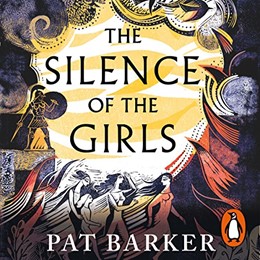
Pat Barker’s The Silence of the Girls, at its core, is giving a modern perspective to a classic epic, in particular drawing focus to those characters who were glossed over in the male dominated Trojan War. Barker’s re-invention of Briseis, a priestess of Apollo who was better recognised as Achilles’ spoil of victory, is one that sparks new and much needed perspective on many of the issues faced by women today. By framing the issues faced by women of the modern day in the context of a harsh and misogynistic war ground, readers are narrated through the horrific course of events that awaited the young women of Troy in both the build-up and siege of the city of Troy. Through Briseis, we are given a new and much needed perspective of the swift footed Achilles, reimagining his well known, heroic demeanor and focusing on his more misogynistic and deprived qualities as both a soldier to Agamemnon and a son to Thetis. The brutal reality of her time as an object of Achilles’ sexual frustration is one that, although distasteful, is one that Barker communicates to a modern-day world excellently in an approachable yet memorable manner.
When reading The Silence of the Girls, I was struck immediately by, as touched on briefly before, the accessible style of writing. Where this is certainly not a novel for younger children, the language used was to be approached by readers of our current generation. Whereas a classicist, this can be off putting to see often vulgar and sometimes oversimplified language when giving voice to an epic, I found in the context of the message that Barker is portraying this use of language to be far better to that of the more antique style of writing Homer was better acquainted with. The message itself about sexual assault and rape culture is one that I found to be moving in the context of the recent #MeToo movement, where individuals have been able to come forward and make a stand against the severity of such issues faced in our time. I further found the voice given to Briseis interesting given the small amount of attention she is given in Homer’s Iliad (although her role in The Iliad is quite important). Through female perspective, the perception of heroes such as Achilles and even Helen of Troy become completely warped from a classical viewpoint, but in a way that rings true to many of the issues that women faced/still are facing today. It is undoubtedly a very sensitive topic, which Barker has clearly commented on with careful choice and precision to make for a truly necessary novel.
The few comments I have on the novel itself are small and circumstantial at best. It is important to begin the novel with the expectation for little detail of the war that frames the novel; wholly drawing focus to Briseis and her time as Achilles’ sex slave as well as her time as Agamemnon’s slave. From a classical point of view, I can understand why this may deter readers who show love for the classical period due to the defining war like and epic nature which one would expect from a story based off of Homer’s Iliad. As such, I can further understand why a more modern use of language can dissuade a classicist from the sincerity of Barker’s message.
Overall, a thoroughly enjoyable read with an undoubtedly powerful message behind it. Personally, I would rate the book a solid 4/5 stars given the creative and, in many ways, necessary viewpoint which our world needs to hear. I have even taken such a liking to the book that I have begun to work on its incorporation into my A-Level coursework for English Literature! Although I haven’t read it myself, I am aware that there is a sequel to the book called The Women of Troy and do hope to read it in the future 🙂




 The 1509