

Written by Akshay Wechalekar
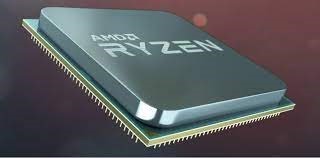
On December 13th, 2016, a new series of chips was announced. Zen chips were born, starting a new era of AMD called Ryzen. The first gaming chips were released in Q1 of 2017, which were the 1200, 1300X, 1400, 1500X, 1600, 1700, 1700X and the flagship 1800X. These original chips were fabricated based upon the new Zen architecture. These were quite inefficient and slow, compared to later models, but were a sudden positive change compared with the dreary years of AMD Athlon.
2018 – Attack of the Clones
Following the wildly successful release of the Ryzen SoC and new Zen architecture come the new Zen+ architecture. However, these chips are less well known than their descendants – Zen 2, 3 and 4. AMD released several new processors with some finally coming as APUs with were much needed as they preceded the flop of Nvidia’s 2000 series GPUs. AMD released its R3 2200 and G variant, R5 2400, 2400G, 2600, 2600G, R7 2700 and their flagship 2700X with a significant 20MB of L3 cache. Even today some more popular models such as the 2400G and 2600 are used today (albeit far slower than more modern chips) but cheap as chips (pun intended) and can be useful in simple workstations. These are much less known as there were no significant advances such as performance or innovative technology leading to performance in some applications being improved. Due to this, only a 13% increase in performance was detected and in games, the flagship was victorious over the 1800X only by a minor margin of 4.7%, disappointing the gaming community.
These were competing against the Intel Coffee Lake 8th generation family of CPUs which were simply named the Pentium, i3, i5 and i7 [i9 made its debut in 9th gen] which had 2, 4, 6 and 8 cores, respectively. However, AMD were sent back to cowering in fear over Intel’s supremacy with a considerable 25% increase in performance over their counterpart’s flagship, the 2700X. AMD were ready for a change, and were waiting for a moment to overthrow Intel and claim the throne in CPU making. And Intel meekly handed them the crown next generation.
2019 – The Force Awakens
The Beast hath Awoken
A year later, unveiled in CES (Consumer Electronics Show) 2019, July 7, Ryzen 3000 was shown and announced several days later. The 3100, 3300X, 3500 (OEM only), 3600, 3600X, 3700X, 3800X, 3900X and the ultimate new flagship, the 3950X. AMD fully upgraded their chips from an 8-core animal to a 16-core beast of a CPU. They had balled their fists and were ready to battle Intel again. However, Intel showed great promise with their 9000 series processors but absolutely flunked the new 10000 series.
Intel’s complications
They released a super variant like the 7000 and 9000 series, but it was only a minor increase in performance over the normal consumer flagship. It was named the 10980XE, 10940X, 10920X and 10900X with 18, 14, 12 and 10 cores, respectively. They were indeed a minor performance increase over the 10900K and were a huge price increase. Another negative contributing factor was the new socket required to use these chips which was LGA 2066 socket with some restrictive motherboards which were (still are) eye-wateringly expensive. Furthermore, Zen 2 was far more efficient with its 3950X flagship competing with the 10900K even drawing 105W (although PL2 being more round the 135W mark) instead of Intel with a 125W TDP and a PL2 of over 250W. AMD had regained the upper hand and were not willing to give it up without a fight. Intel had begun its newfound legacy as a company of power-hungry, heat-expelling beasts.
2020 – Revenge of the Sith
Zen 3
In the middle of the pandemic (COVID-19) Zen 3 made its debut. The new processors released were the Ryzen 4100, 5500, 5600X, 5600G, 5700G, 5700X, 5800X, 5800X3D, 5900X, 5950X with 4 cores for 4100, 6 cores for 5500, 5600X and G, 8 cores for 5700X and G, as well as the 5800X and X3D versions, 12 cores for 5900X and finally the flagship 16 core 5950X. However, we must not gloss over the new and incredibly powerful 5800X3D which has a new type of technology. 3D stands for the brand-new 3D V-cache (ultra-fast memory on the die) which is vertically stacked instead of increasing the die area. This leads to a total of 96MB of L3 cache and a total of 100MB in L1, L2 and L3 cache. Furthermore, it beats its counterpart (in some games), the 12900K and KS variant which and the 5.2GHz (turbo) chips compared to a diminutive 4.5GHz max boost. To this day, in some games it still comes in 2nd place for running games (recognising that there may be occasional CPU bottlenecks). The ‘G’ variants refer to the integrated GPU and they are classified as APUs (a combined CPU and GPU).
Thermals and Extra info
Additionally, it is important to note that all AMD CPUs that I have included all have 2 threads per core, but the Intel CPUs E-cores only have 1 thread per core, unlike the P-Cores which have 2 threads per core. However, there was a severe problem for Intel. The AMD flagship has a TDP of 105W (although 135W in real use), but Intel has a TDP of 125W. However, calling this an exaggeration of efficiency is an understatement. Occasionally, during considerable overclocking, it can easily draw over 350W of power. Sometimes 420W! However, in everyday use, it has a usual TDP of 220-250W. The drawback to this, other than burning a hole in one’s wallet for energy bills, it creates a perplexing amount of heat. Only a 420mm radiator with a high-level pump and efficient custom loop can tame the wild beast. This is not the case for AMD’s flagship, which requires no more than a simple 280 – 360 mm AIO (all in one) cooler.
2021 – The Phantom (Intel) Menace
Intel’s Disaster – Back in tech
After Intel’s confusing 10th Gen, Intel realised they needed a change. They simplified their naming system by removing the XE variants of the CPUs (extreme) and released the 11th Gen on March 30th, 2021, based on Intel’s 10nm process node, known as 10SF. Intel released the (Q3 2021) 11100HE (i3), 11400/F (i5), 11500 (i5), 11600K/KF (i5), 11700K/KF (i7), and their flagship 11900K/KF (i9), which had a base clock of 3.5GHz, and a boost of 5.3GHz with 8C and 16T. However, this is a downgrade from the previous generation. The 10900K had 10 of these immensely powerful cores (at the time) with 20 threads and had a base clock of 200MHz higher than the 11900K. This was a total disaster for Intel’s consumer market as many turned to AMD, due to their much fairer pricing, more powerful 16 core chips with a far higher L1, 2, and 3 cache size. Therefore, Intel’s dominance over the market share took a hit, especially after their failed 10940X, 10960X and 10980XE chips being totally unfairly priced. The only thing that saved some grace for Intel was their reluctance to change their socket – they remained with their LGA 1200 socket, and proved a buying point for these chips, they had cheap motherboards. AMD, however, had a hard time attempting to lower the prices of their motherboards, as the chip shortage came into fully swing and their partners’ refusal to subsidise their consumers. This is why AMD did not gain total supremacy over Intel.
AMD’s Complacency
In 2021, AMD released very few new processors, suggesting they were complacent, realising Intel’s feeble attempts to reclaim their throne as the most powerful of the CPUs were unachievable (for now). However, AMD began to focus on the mobile sector, releasing some 5000U chips, yet again weakening another aspect of Intel’s market share. AMD released their 5980, +5900, 5800, 5600H – HX/HS chips and their 5800, 5700, 5600, 5500 and 5300U chips all of which are running on Zen 3 (except the ‘U’ chips [not including the 5800U]) which surprisingly were quite power-hungry compared to Intel, with the flagship consuming 45W+ (which is quite a lot for 2021 laptop chips) but failing to beat them, with only a 4.8GHz boost clock, whilst Intel were slightly ahead with their 11980HK running at a blazing 5.0GHz – both these processors had 8T with hyper-threading (2T/C). AMD and Intel were battling it out on every front, to see who would crack first, and AMD seemed to be on the rise.
Intel’s Reverse Card
Intel had success with their new LGA 1700 socket and Z690 motherboard and chip design (Alder Lake), by far exceeding the expectations of AMD. The new Intel i9 12900KS had a blistering 5.5GHz clock (overclockable) with 16 cores. Furthermore, there were 25 models of the 12th gen series but the most significant were the i5 12600K, i7 12700K and the 12900K and KS with 10, 12 and 16 cores, respectively. Contributing to their incredible performance in games over the disaster of 10th and 11th gen, they used a new way of splitting computational performance over extra cores. For example, the i9 12900K(S) uses 8 high clocked performance cores or P-cores (at around 5.2-5.5GHz) for heavy loads such as gaming, CPU video encode and decode (without consideration of the H.264 and H.265 GPU encode and decode engines) as well as 8 efficiency cores or E-cores for background system tasks (at around a clock of 3.9GHz [stock]) which was dubbed as the ‘hybrid’ CPU system which had been fully adopted in almost all Intel CPUs.
2022 – The Empire Strikes Back
Zen 4
After the long wait, Zen 4 was finally announced on September 27th, 2022, where its architecture followed its ancestor and introduced the controversial new AM5 socket, which was LGA instead of PGA which allowed safer travel for chips and more use for protective covers on motherboards. However, Intel came in 1 day earlier to release the also long-awaited Raptor Lake chips, still using LGA 1700 and their blisteringly quick 13900KS and Z790 chipset. AMD announced (non-X variants later but one must include it) R5 7600, 7600X, R7 7700, 7700X, R9 7900, 7900X and the flagship 7950X. Another thing to note is that all AMD 7000 series have integrated GPUs. The R5 has 6 cores, R7 8 cores, R9 has 12 cores for 7900 variant and 16 cores for the flagship.
Raptor Lake
However, Intel displayed its incredible CPU processing speed jump, not seen since the end of its millennium year reign. The most prolific CPUs are the i5 13600K, i7 13700K and the flagship i9 13900K and KS with 14, 16 and 24 cores, respectively. Surprisingly, the AMD flagship only has as many cores as its i7 counterpart, but all are extremely powerful cores at 5.7GHz each freely overclockable. It also has an identical TDP of 105W but can be up to 155W in normal use. In comparison, the i9 13900KS counterpart has yet another fake TDP of 125W but effectively used, it is at least in the high 200W category. However, it absolutely blows AMD out of the water with its stock 6GHz turbo clock frequency. Rest assured for all AMD fans; it can rarely reach it due to its scorching temperatures during heavy load. It has caused such a problem that Intel had to raise its TJ-MAXX to 101°C from 95°C as no cooler under a 560-640mm radiator can keep it cool (which in most consumer cases are inexplicably challenging to find). In comparison, AMD strengthened the architecture of the chips to allow them to run at TJ-MAXX 24/7. However, for some extremely advanced technicians and PC specialists, the IHS (integrated heat spreader) can be removed (and cleaned with isopropyl alcohol) as covered with an allow of liquid metals for thermal paste which have a thermal conductivity of around 70W/mK which is 10fold more effective than non-metallic compounds of thermal paste which are more commonly used in day-to-day consumer PCs.
AMD’s jump from PGA to LGA
AMD’s new AM5 socket and motherboard are incompatible with the older AM4 X570 chipset and require a gaming rig or workstation to be fully modified. One must use DDR5 RAM (highest GT/s can be 6.8) as well as the next B650 or X670 chipset with the new LGA socket. Contradicting AMD, Intel reuses the LGA 1700 socket and allows full compatibility of DDR4-2666 to 4000 and DDR5-5200 or lower. AMD has promised to sustain the AM5 platform for at least 5 years until AM6.
The 3 Dimensions in AMD
Moreover, AMD has released a few new X3D variants of chips following their success from the 5800X3D. They released a 7800X3D, 7900X3D and 7950X3D. Since they are all 3D V-cache chips, they have 100, 128 and 144MB of L3 cache demolishing the 13900KS with a trivial 36MB of L3 cache. All have a TDP of 65W and all follow that perfectly marking how efficient AMD can manufacture their gaming chips. The 7800X3D uses the same 3D V-cache as the 5800X3D but with a much higher clock of 5GHz making it the fastest processor (gaming-wise) followed by the 5800X3D. However, the 7900X3D and 7950X3D use 2 different dies as they have 8< cores. One is a normal die, and one has the 3D V-cache but sadly the software is not there yet, and it only uses the performance of the 8 non 3D V-cache cores. This problem occurs during dual CCD mode but when the single CCD mode is used on the 3D V-cache chip, it is being used to its full potential. This is why the 7950X3D with 8 cores per CCD, is nearly as fast as the 7800X3D as they are both using 8 3D V-cache CCDs (but the 7950X3D is slower due to latency in communicating between the two CCDs and signals between them and the chipset). AMD decided to do this as they recognised that only one CCD with the 3D V-cache is required to reach the same performance. As the CCDs with the 3D V-cache are much more prone to damage from overclocking and higher clock speeds (as well as thermals), it is required for them to be ≈200MHz downclocked from their non 3D V-cache counterparts. Therefore, for a boost in performance, AMD used one CCD with and one CCD without the 3D V-cache like Intel with E and P-cores. However, this overcomplicates the chip and there is no positive function for a non 3D V-cache CCD within it.
2023 – Return of The Jedi
Bergamo and Genoa
AMD has pushed far beyond its competition, with a wide spectrum of chips being advanced all at the same time. The new EPYC 9654 Genoa and 9754 Bergamo have undoubtedly crushed any chance of opposition competing in the server side of the market. Each chip has 96C, 192T and 128C, 256T respectively. This means that on the 9754, there are 256 logical processors all running (assuming max clock) at 3.1 GHz. This may not seem like a lot, but this is the requirement to stability and reliability, as after all, these are server chips. Regarding the structure of the 9754, there are only 8 compute dies, each with 32 cores. This is possible through the new advancement of Zen 4 to Zen 4c, which is intended to decrease the size of cores by decreasing clock speed, power usage as well as lowering the L3 cache size. This may seem like a problem for these chips which prioritise cache. However, it must be noted that 128 cores, albeit with less cache does add up to a whopping 256MB of cache! However, the Genoa model (9654) ‘only’ has 96 cores, and this makes sense, as it runs on the more powerful, power-hungry Zen 4 architecture. Due to this, there are 12 CCDs, each with an octa-core structure. Consequently, there is a significant disparity between the clock speeds for the 9654 and 9754; 9654 with a Base of 2.4 GHz and Boost 3.7GHz, compared to 2.25Ghz Base and 3.1 GHz boost for the newer 9754. However, we must talk about the capabilities of each of these chips. Each has support for up to 128 PCIe Gen 5, which effectively gives it support for up to 8 GPUs running at full Gen 5 speeds (64GB/s unilaterally and 128GB/s bilaterally). Furthermore, due to it being built for servers, it has an ungodly potential for RAM capabilities. The EPYC 9754 can support up to 6TB of DDR5-4800 RAM. Similarly, the EPYC 9654 can be compatible with DDR5-4800 RAM but is able to support 6144GB (6.15TB). The performance drop of 32 cores can almost be negated by the power of Zen 4 to Zen 4c, as many factors have been changed between these two architectures, although part of the same platform.
AMD Threadripper 7000
AMD released its new Threadripper models on November 21st, 2023, splashing out the new 7960X, 7970X, 7980X for the standard models, and for the extreme workstation enthusiasts, the 7975WX, 7985WX, and the flagship 7995WX. They have 24C, 48T (7960X) and 32C, 64T (7970X) and 64C, 128T (7980X) and 32C, 64T (7975WX), 64C, 128T (7985WX) and finally 96C, 192T (7995WX). The newfound Zen 4 and 4c architecture allows for more cores to be fit in with a smaller die area due to it being based on TSMC’s 5nm process. The new cores are boosted on the 7995WX to an incredible 5.1GHz, which is very impressive, further elevated by the fact that all the cores are full power and are not hybrid. Therefore, it generates quite a bit of heat, but negated by the fact that it has a very large IHS which allows it to spread the heat over a much larger surface area. Additionally, as it is intended for consumers, it is compatible with DDR5-5200 RAM and has 384MB of L3 cache. This is even more than the EPYC 9754! If you want more information on the clocks and specification of the other chips, visit AMD Ryzen™ Threadripper™ PRO W7000WX Workstation Processors. However, we have not even discussed the sheer power of these chips – especially considering applications of these chips. For example, when rendering the Cinebench R23 renderer, the flagship exceeds 100,000 points (standard boost clock) at 350W, which is simply astounding. For reference, the flagship Intel Xeon W9-3495X (newest Xeon chip) can boast only 70,000 points at 561W. Even if we extend the Xeon to extreme LN2 cooling (liquid nitrogen), it exceeds 125,000 (whilst running at 5.5GHz). This is while consuming an eye-watering 1900W! However, in comparison, the 7995WX in LN2 consumes a huge amount of power, at around 1000W. Even without LN2, it can post a Cinebench R23 score of over 185,000 points! This obliterates the Xeon and stands alone in the workstation CPU market. (N.B. this is not a common method of cooling – it is just for statistics). All these new chips run on the new WRX90 and TRX50 sockets on new motherboards. AMD does it again with Threadripper, undoubtedly dismantling Intel’s workstation market share.
Intel’s Rebuttal – 14th Gen
Intel released their new 14th Gen chips on October 17th, 2023, all based on the Raptor Lake ‘Refresh’ architecture which featured their i5 14600K/KF, i7 14700K/KF and their flagship i9 14900K/KF. The flagship model is suspiciously like the previous generation’s i9 13900KS, as both have the same core count, P and E-cores as well as the same boost GHz of 6.0GHz out of the box. The 14900K boasts a score of 38,500 multicore and 2,400 single-core performance on Cinebench R23. However, this is somehow lower than the 13900K, which received a score exceeding 40,000. From my understanding, this is from the CPU throttling due to overheating, which is yet another problem for these newer models (although still very much prevalent since the release of the 12000 series). Intel however, decided to change the throttle temperature of the chip to 115 degrees Celsius (for good reason) and allowed for a little more thermal headroom. However, the overheating is so strong, that even a 360mm AIO cannot restrain it or even keep it under the thermal ceiling. However, in a head-to-head battle against AMD’s flagship, it occasionally comes out on top. The 14900K clocks in at 2217 points in Cinebench R24, compared to 2187 points from the 7950X. Additionally, in games there are some aspects where the extra GHz will benefit the FPS in some games, but the extra cache will do the same for AMD. However, the 14900K should be compared not to the 7950X, but the 7800X3D (reasons previously listed) in gaming. There aren’t many reviews for these, but it can be certain that the 7800X3D is a threat to the dominance of Intel’s flagship CPU.
2024 and beyond – The Rise of AMD

Reflection
AMD has regained the upper hand in CPU making after the reign of Intel for 15 years and are innovating in successful ways as Intel is and now it has become a consumer war, of who can sell the bigger market share. AMD is actively competing with Intel, as they prepare to release their new 8000 series based on Zen 5 – with TSMC’s 3nm process. Furthermore, they are also warring over the server chip market with AMD showing their potential with the new Threadripper chip with 96 cores and 192 threads (7995WX), shattering Intel’s feeble attempt to further advance the Intel Xeon platform, but still lagging far behind with their Intel W9-3495X – 56 cores and 112 threads on its most high-end model. We are about to see the rise of AMD and the wane of Intel. We do not know a lot about the future of Ryzen, but one thing is for sure: AMD has won the first battle but has not even come close to winning the war.




 The 1509