
By Charlotte Hampson (from the GHS Nightingale Newspaper)
Some have named 2024 ‘The Year of Democracy,’ with elections in almost 70 countries around the world and over 4 billion people eligible to vote. However, not everyone’s vote carries the same value, and in some countries leaders manipulate the system to ensure they will always have a victory. Let’s take a look at some of the dictators from across the political spectrum who have changed the course of history.
Kim Jong Il (North Korea, 1994-2011). Communist.
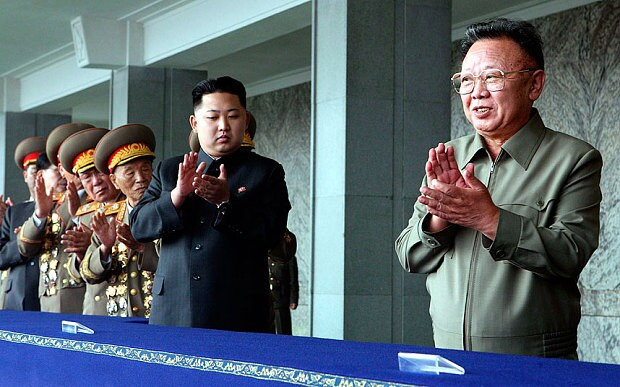
He inherited rule of North Korea from his father Kim Il Sung and during his lifetime held many political and military positions, including General Secretary of the Workers’ Party of Korea (WPK) and Supreme Commander of the Korean People’s Army (KPA).
Kim ruled Korea oppressively and strengthened the role of the military, making it the centre of organised, ‘civil’ society. He took on the title of ‘Dear Leader,’ and was posthumously referred to as ‘the General’ by North Korean media.
His policy of Juche (self-reliance) led to economic stagnation in the country as its trade ties – even with its traditional partners the Soviet Union and China – had been cut off. He had complete power in North Korea until his death and, although he didn’t have to stand for popular election, he was unanimously elected to the Supreme People’s Assembly every five years, giving him practically unlimited power despite his misguided economic policies, although the increased role of the military led to a degree of economic growth.
Fidel Castro (Cuba, 1976-2008). Communist.

Castro played a key role in the Cuban Revolution and overthrew the previous president, Fulgencio Batista, causing the US to launch an assassination attempt on him. Following this, Castro aligned with the Soviet Union (the USA’s communist enemy) and allowed them to place nuclear weapons in Cuba, leading to the Cuban Missile Crisis – a major incident in the Cold War – in 1962.
Under him, Cuba became a one-party state, meaning that the public could not choose between two different parties or elect representatives they feel share their views (in contrast to the UK, where voters can choose between a Labour or Conservative government and they have the option to vote for minor parties instead).
He converted Cuba into a socialist state and nationalised businesses while expanding healthcare and education, but he repressed the press and free speech. While his supporters see him as a champion for socialism and anti-imperialism, his critics recognise the effect of his dictatorial rule in human rights abuses and the impoverishment of the country.
Francisco Franco (Spain, 1936-1975). Fascist.

Franco was named the leader of Spain and given the title of ‘Generalissimo’ (the very general) after his right-wing, nationalist forces overpowered the recently elected leftist government in 1936. This led to a very brutal Spanish Civil War which ended with a Nationalist victory in 1939, meaning that Franco became the dictator of Spain.
The Catholic Church had an important role to play during his dictatorship, oppressing women’s rights and encouraging women to become submissive mothers and housewives. He banned the speaking of regional tongues in Spain, forcing everyone to speak Castilian (‘mainstream’ Spanish) and imprisoning heretics or anyone who opposed his rule. After he was toppled from power, Spain became a liberal democracy and experienced one of the fastest social progressions in the world, with women’s rights, the legalisation of gay marriage and the free expression of regional identity being established in quick succession. However, because of the role of the Church in his dictatorship, the number of Spanish Catholics has drastically decreased as people distance themselves from what they remember as an oppressive regime.
Donald Trump? (USA, 2017-2021; 2024?). Republican (right-wing).

The ex-US president was recently interviewed by Sean Hannity, Fox News, and asked to confirm he would not be a dictator, following growing concerns about his autocratic tendencies. His reply? “Except for day one.” When asked again, he repeated his claim that he would be a dictator on day one, using this opportunity to close the border with Mexico and continue drilling for oil.
Donald Trump has also called his competitors ‘vermin’ and vows to seek revenge on them if/when he reclaims power. His blatant avowal to abuse his powers and establish an autocratic regime are leading many to fear that he may become the next in a long line of dictators. After all, what is there to stop him from extending his promised one-day dictatorship to last the rest of his life?


 The 1509
Leave a comment