
By Krish Lukha
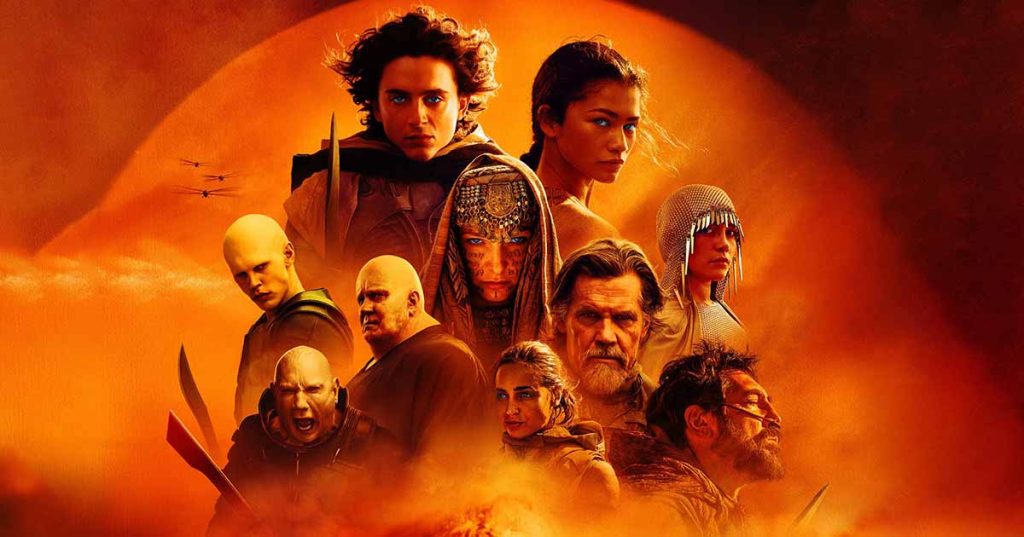
Dune Part II, created by the legendary director Denis Villeneuve (Blade Runner: 2049 and Dune), is being heralded as a “definitive sci-fi epic of a generation” by critics and audiences alike. Even Christopher Nolan, director of many successful films including “Oppenheimer,” has lauded it as a masterpiece and even compared it to “The Empire Strikes Back.” It continues a tale of tragedy, romance, religion and political conflict, which captivates its audience through its breath-taking visuals, phenomenal soundtrack (courtesy of Hans Zimmer) and stunning plotline. Whilst Dune: Part One (2021) was an incredible film which delves into the first half of Herbert’s novel and builds an impressive universe, Dune: Part Two surpasses it in almost everyway possible and will forever be remembered as one of the greatest triumphs in cinematic history, as well as Villeneuve’s “magnum opus.”
Heavy spoilers for Dune: Part Two follow
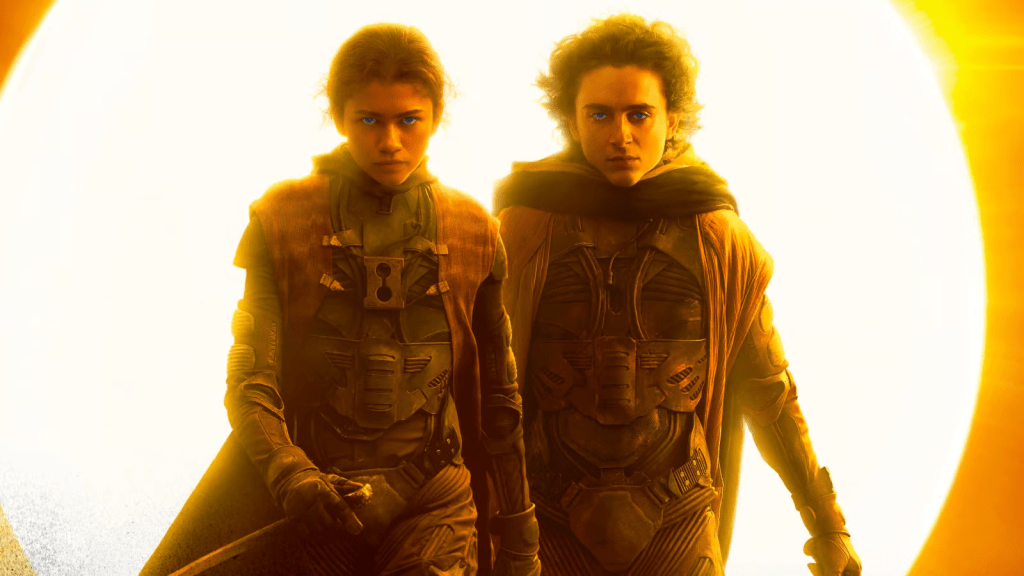
The film begins only a few hours after the events of Part One (which have been summarised here) and the total obliteration of House Atreides. Baron Harkonnen makes Rabban the new fief of Arrakis and they resume spice production within a day. The first half is slightly slower, and focuses on Paul and Jessica adopting to life in the desert as well as the Harkonnen control of Arrakeen. However, the second half is where the film truly starts to shine. This is where newer characters such as Princess Irulan and Feyd-Rautha Harkonnen play a more prominent role, whilst Paul embraces his destiny as the Kwisatz Haderach, begins his religious conquest and seeks revenge on those who were responsible for the death of his father.
There are two standout scenes which truly go above and beyond:
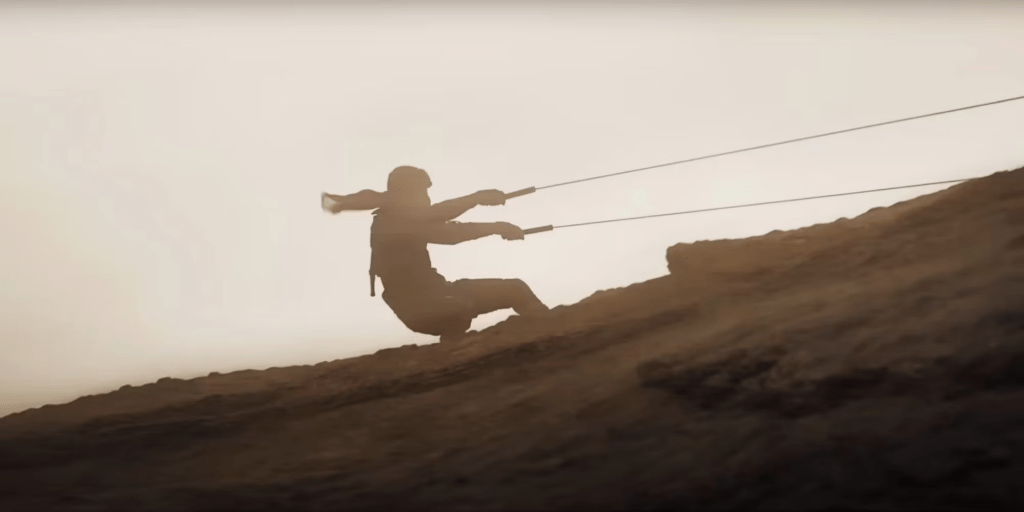
The first is where Paul completes the Fremen ritual of adulthood in order to be accepted as a true fighter. He has to undertake the task of riding his first sandworm, which is one of the largest to exist on the planet.. Everything about this scene was pure perfection; from the cinematography and VFX to Hans Zimmer’s perfectly composed piece which slowly heightens the tension, Paul’s dangerous and intense task is portrayed in a way whereby the audience can feel almost immersed within the scene itself.
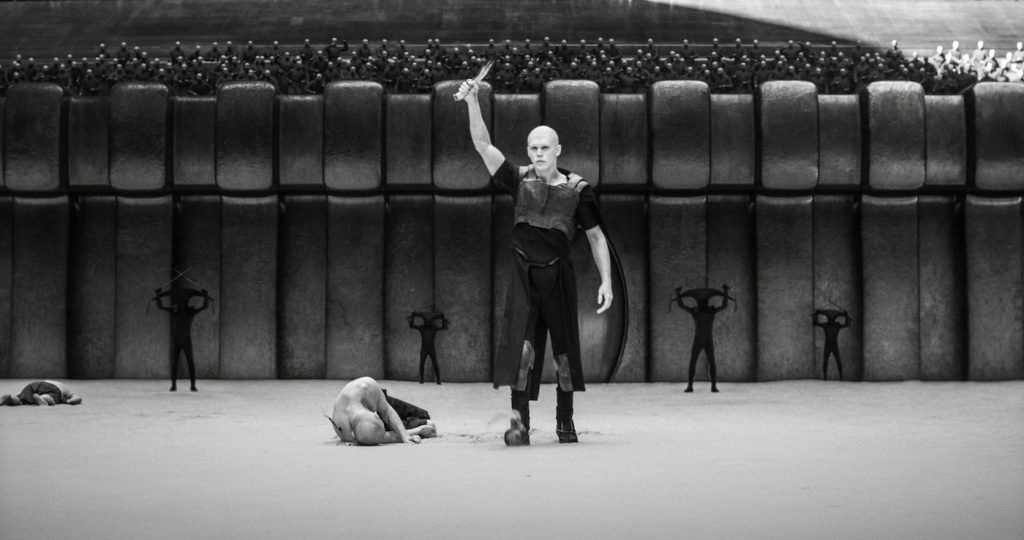
The second is on Giedi Prime, homeworld of House Harkonnen. This scene introduces Feyd-Rautha, the psychotic nephew of the villanous Baron who brutally murders three Atreides men in a celebratory combat. Lady Margot, a sister of the Bene Gesserit, also begins her manipulation of the future of House Harkonnen whilst also securing its bloodline. She has been ordered by the Reverend Mother Gaius Helen Mohaim to control Feyd-Rautha, in order to use him against Paul Atreides. It is shot in black and white and, combined with an accompanying piece of music, this increases the intensity and barbaric nature of the animalistic Harkonnens. The villany and backstory of Feyd in this scene set him up to be Paul’s antithesis later on. Even by his design, he is set up to be a darker mirror of our protagonist.
In addition to these two scenes, the final 40 minutes are where the film truly shines. Whilst the beginning was fairly slow paced and at times, could be considered slightly dull, the second half slowly builds up the plot and finishes with a cliff-hanger and dramatic flair. Embracing his destiny, Paul becomes the Fremen Lisan-al-Gaib and Bene Gesserit Kwisatz Haderach, after drinking the perilous Water of Life. He leads his army with the full might of the Atreides atomic arsenal towards Arrakeen, where the emperor, Princess Irulan (heir to the Imperium), Baron and Feyd-Rautha await the arrival of Muad’dib, the infamous Fremen prophet. He orders Gurney and his legion to deal with Rabban, the Baron’s now disgraced nephew, whilst the rest of the Fremen fight of the Sardukar. At last, with all other enemies either defeated or kidnapped, he heads inside the Emperor’s vessel before killing Baron Harknonnen, now revealed to be his grandfather. In exchange for Irulan’s hand in marriage, he agrees to spare the Emperor but is challenged by Feyd-Rautha to a knife fight. Uttering the words of Jamis in the previous film, he begins to attack his enemy. Eventually, with Feyd-Rautha dead, he begins his holy war with the support of his mother Jessica (now a Reverend Mother), his unborn sister Alia (who is able to telepathically communicate with her brother due to the effects of the Water of Life), Stilgar, Gurney and Irulan (allegedly).
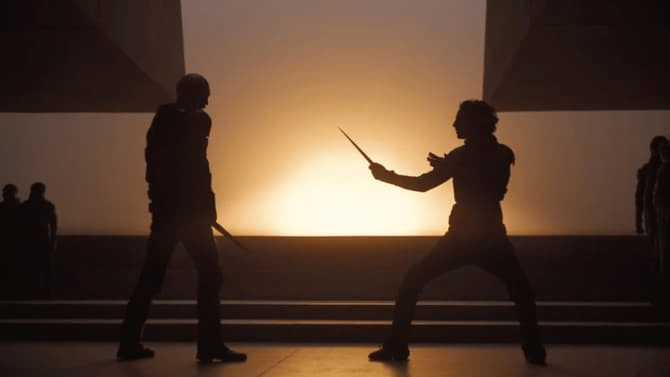
However, in a turn of events which is perhaps the largest diversion from the book, Chani rebels against him. In Herbert’s novel, Chani is a firm believer in the Bene Gesserit propaganda and the Lissan-al-Gaib, who stoically supports Paul and accepts the role of his concubine. In this film, Villeneuve portrays Chani as a fierce fighter and athiest who, whilst engaging in a romantic relationship with him, refuses to accept Paul Muad’Dib Atreides as her prophet. Furious that she will be unable to wed Paul and emotionally scarred by the sudden changes in her lover, she flees into the desert. The final shot sees her, enraged, about to ride a sandworm.
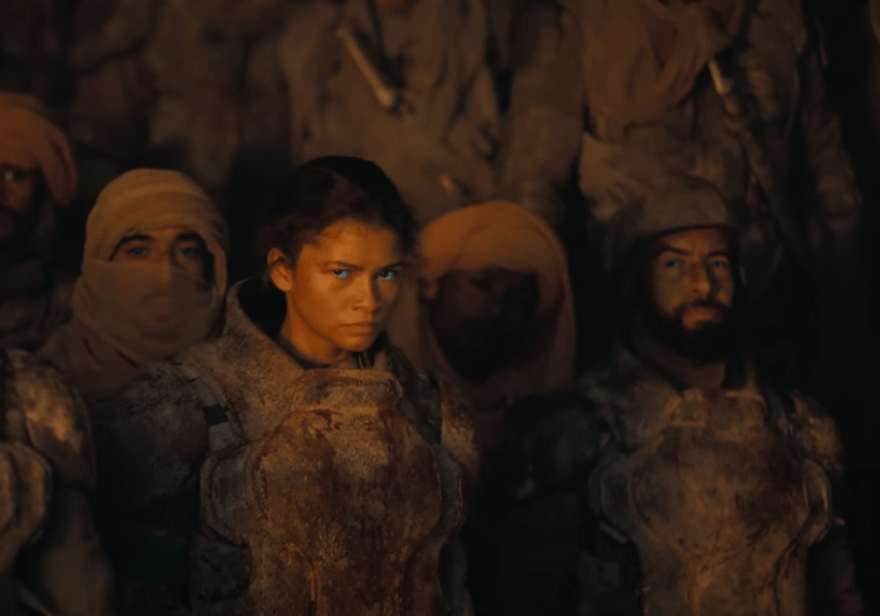
All in all, despite a slow beginning, Dune: Part Two remains one of the greatest sci-fi films of the century. The star-studded cast (including Timothée Chalamet, Zendaya, Josh Brolin, Austin Butler, Florence Pugh, Rebecca Ferguson and Javier Bardem), incredible director and skilled composer all shape it into a masterpiece. The cast of the first film does an incredible job of continuing their roles whilst the newcomers portray their characters with ease. Christopher Walken’s Padishah Emperor Shaddam IV is presented as a frail, weak ruler. Princess Irulan is shown to be a smart, talented young heiress and Austin Butler, one of the strongest members of the cast, completely shows how brutal and psychopathic Feyd-Rautha Harkonnen can be. At the time of writing, Dune: Part Two holds a rather impressive 9/10 rating on IMDb, a 94% critics score on Rotten Tomatoes, a 95% audience score and a 4.6/5 rating on Letterboxd. Although it is only March, as this film has surpassed its predecessor (which also received a nomination), it may make a fierce contender for the Oscars’ coveted Best Picture and may take home a plethora of other awards in addition. I would highly recommend watching this in cinemas as it should be viewed on the largest screen possible.
Dune: Part Two is out now exclusively in cinemas


 The 1509