
By Ayaan Bhagat
I first got dragged to watch Godzilla: Minus One with some friend, completely oblivious to the utter shock that I was about to encounter. I had some vague recollection of watching one of the American films several years before and it being a very generic “BIG LIZARD GO SMASH” film. What I saw was not only the best Godzilla movie I have ever seen but one of the best films I have ever seen full stop.
The story is set in post-war Japan with our protagonist, a kamikaze pilot Shikishma, abandoning his duty and making an emergency landing only to have an encounter with the fabled “Gojira.” The story follows him and Japan attempting to rebuild following the tragedies of the war.
The key that makes this film incredible is it’s focus on making the characters as compelling as possible. Normally, in action films like the American version of Godzilla, I often find myself rooting for the monster (narrative plots are a snooze fest and character exposition is awful) and yearning to witness the destruction that it will cause. However, for Minus One this is not the case. The character development is incredible to the point where you want nothing more than for Shikishma to get his peace.
Crucially, Godzilla isn’t overused in the film, appearing in the movie for about 5 scenes. This makes it so much more terrifying when it does appear since it hasn’t been oversaturated, the perfect balance of build up and payoff. Also, what was a welcome change was the fact that there was no motive for the beast, no anti-heroic altruistic arc that all Hollywood movies seem to incorporate. It was just a massive unstoppable force from hell tearing through Japan and the beautifully immersive world that the film had made.
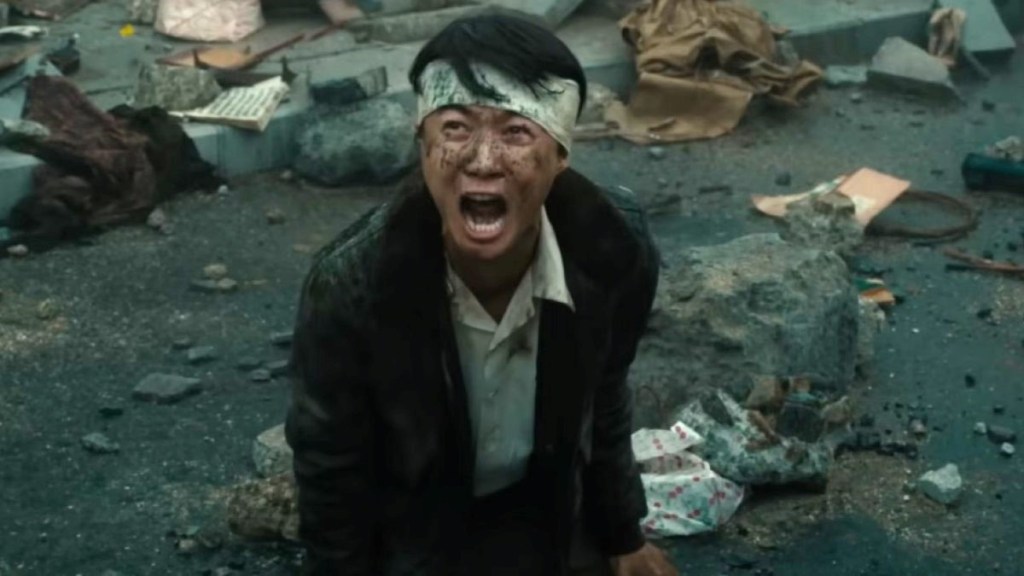
Surprisingly for a movie about a demonic lizard, the movie dives very deeply into fairly dark topics such as survivors guilt and PTSD and pulls them off exquisitely. There are some scenes that are very harrowing to watch, one in particular when Shikishma breaks down in a panic attack believing that he has already died in the war because his pain is too much to bear.
I think the what really made this film powerful for me was its’ exploration of the state of post-war Japan and their culture surrounding war. It displays a real look into the ‘die on your shield’ mentality of Japan and its common disregard for human life, whether that be kamikaze pilots or poor distribution of healthcare and supplies causing more deaths to disease than bullets. This film faces these dark parts of Japanese history in such a thoughtful way that you almost forget that this is a movie about Godzilla.
It’s that point which makes the film what it is. Godzilla as the lizard demon itself is irrelevant. It could have been any other threat; Godzilla doesn’t make the story but instead just compliments it. This ties back to the roots of Godzilla as a character, where in 1954 it was created to be a symbol for the atomic bomb. This was what it was intended to represent far before the degradation (mostly due to the American studios) into a mess that prioritised marketability over meaning. Looking at the film through the lens of the atomic bomb provides such a clear new perspective of it and at what it seeks to say about Japanese history.
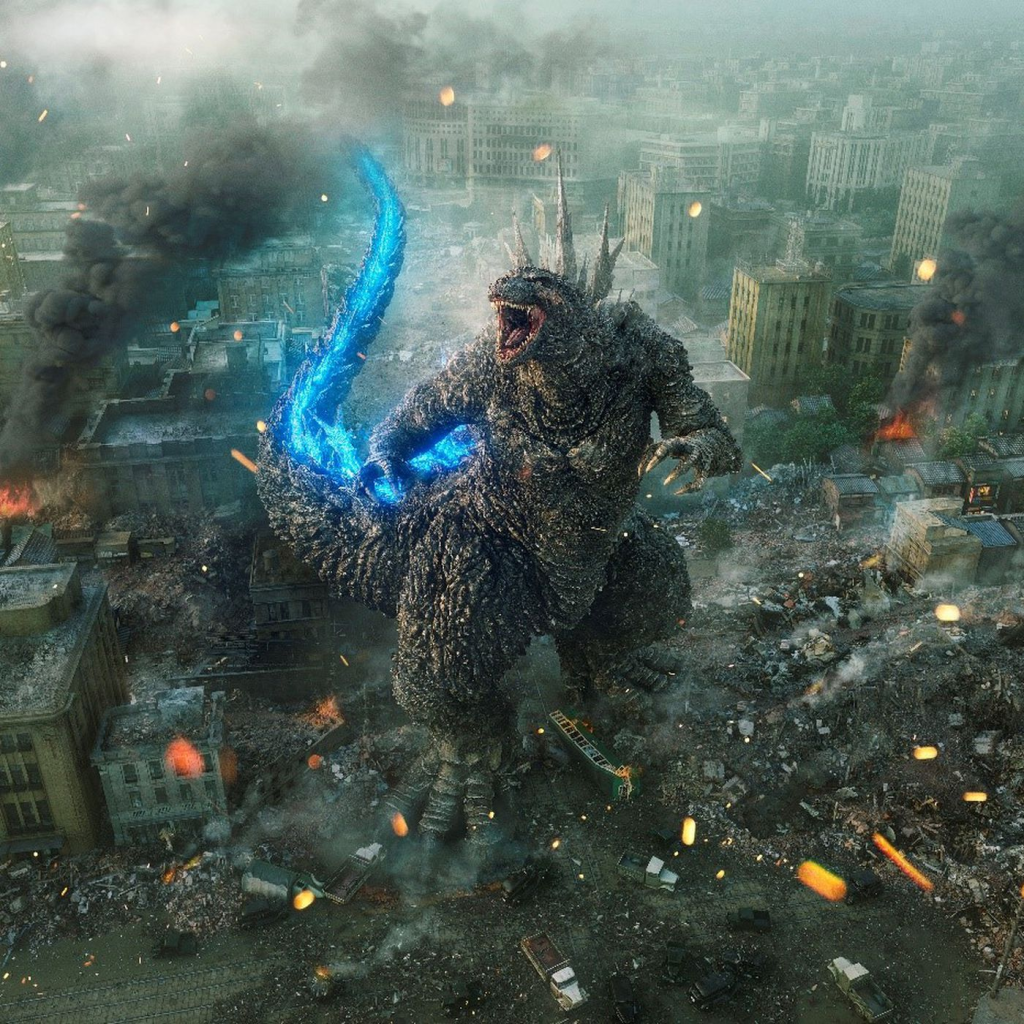
Now here is the main event. While watching this movie I was blown away by the sheer beauty of the visual effects in the film and how seamlessly they blend into the environment. Out of interest I decided to search up the budget of the film. It was 10 million US dollars. For reference, Marvel Studios’ Thor Love and Thunder is a movie bashed for sub-par CGI in parts of the film which had a budget of $250 million. This is insane! Godzilla: Minus One did not seem to cut corners in any part of the film, especially not for VFX. In fact, it has been nominated for an Oscar for its special effects with a team of only 30 VFX artists! Another film that has been nominated for the same award is Guardians of the Galaxy: Volume 3. How many VFX artists did they have? 1121.
Godzilla: Minus One was such a feat that it is set Hollywood on fire. A beautiful film with a beautiful story and beautiful visuals that has surpassed the most, if not all of modern Western cinema with a budget that is essentially nothing compared to the likes of those in Hollywood. This is the wake-up call that not only Western movie studios, but also audiences, need to look past the mess that is American cinema to the rest of the world producing incredible films like Godzilla.

If you have seen this movie, please leave a comment on your thoughts and if you haven’t seen it, watch it immediately! No matter what you think about Godzilla, I personally guarantee that you will most certainly enjoy it.
Final rating:
95/101
(The 101 is symbolic; it is rated out of 100 but the extra 1 is used to show that there will never be a perfect film)




 The 1509
Leave a comment