
By Marcus Perkin.
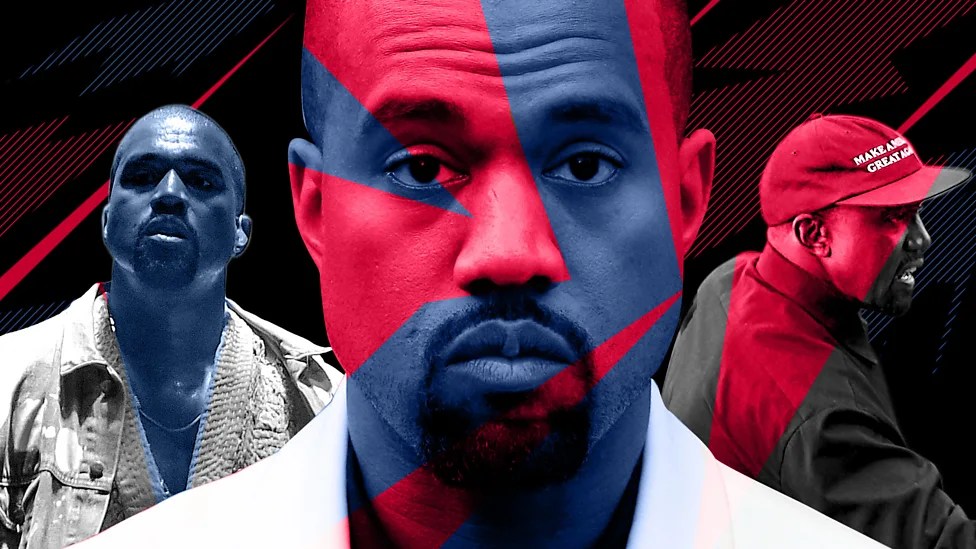
Kanye West, also known as Ye, is undeniably a world-renowned icon. An American rapper and record producer, he has an impressive 24 Grammys, which tie him with Jay-Z for the most Grammy Awards won by a hip-hop artist. His influence was so large in 2020 that he even decided to run for President in a highly publicised, albeit unsuccessful, manner.
However, the cultural perception of West has changed dramatically in recent years, casting a shadow over his legacy. Just two years after his presidential campaign, he began a series of controversial and harmful statements. In October 2022, he claimed that the rapper Sean ‘Diddy’ Combs was controlled by Jews and declared that he would go ‘death con 3 On Jewish people’. This has marked a steep decline in his public image, characterised by disturbing expressions of heavily problematic and anti-Semitic views.
- Two months later after his tweets about Diddy, West stated ‘I like Hitler’ and ‘I am a Nazi’ in a notorious interview on the conspiracy theorist show InfoWars.
- In March 2025, he appeared in an interview with DJ Akademiks wearing a black Ku Klux Klan hood and robe, an outrageous act widely condemned.
- Over the course of April and May 2025, West released the single Heil Hitler, which shockingly included the lyrics ‘****a, heil Hitler’ and ‘all my ****as Nazis’, followed by an excerpt from a speech by Adolf Hitler. This further intensified the outcry.
Given his array of inflammatory remarks, you might naturally conclude that West should simply be dismissed as a public figure. However, the situation is much more complex: West has also made a number of comments that directly contradict his offensive rhetoric.
- In an Instagram post in March 2023, he wrote, ‘Watching Jonah Hill in 21 Jump Street made me like Jewish people again … No one should take anger against one or two individuals and transform that into hatred towards millions of innocent people.’
- In February 2025, he tweeted ‘after further reflection I’ve come to the realization that I’m not a Nazi’.
- Most recently, last month, he tweeted ‘I am done with antisemitism’ and publicly asked God to forgive him for the pain he has caused. He also took down the controversial Heil Hitler and replaced it with Hallelujah, a song which substitutes the original pro-Nazi lyrics with lines relating to Christianity.
But just as some hoped for the start of some sort of recovery process, West tweeted again.
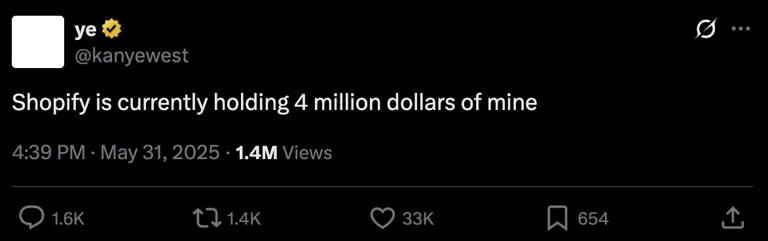

This quick relapse raises a fundamental question: why does there seem to be a constant cycle of extreme statements and apologetic retractions of these statements? Is Kanye serious, or is there a deeper underlying problem?

In 2016, Kanye West was diagnosed with bipolar disorder. According to the NHS, this is characterised by ‘extreme changes to your mood’ with mania (positive, high-energy moods) and depression (negative, low-energy moods) that can last ‘a few days or weeks at a time’. Kanye’s condition offers a crucial lens through which his behaviour can be examined. During manic episodes, those with bipolar disorder can experience racing thoughts, egotism, and impulsive behaviour. This helps to explain Kanye’s bold, outrageous statements and actions, presumably made without any thought as to potential consequences—even if he did truly hold such beliefs, another person in the same position would likely keep quiet, knowing that it could lose them a lot, like how Kanye lost numerous endorsements and partnerships. On the other hand, depressive moods can lead to strong feelings of guilt and worthlessness. This could lead to the introspection and desire to repent which aligns with Kanye’s apologies.
A relatively rapid succession of these episodes could theoretically help to explain the reason behind these shifts in his public persona and expressions. However, mental illnesses are very complex, and people with bipolar disorder often experience it differently. Kanye’s 2016 diagnosis can provide a good context for his anti-Semitic statements, but it doesn’t excuse them, nor does it fully explain his behaviour. In February 2025 though, Kanye alleged in a podcast interview that he believes he was misdiagnosed previously (by a Jewish doctor) and has now been diagnosed with autism, seeing this as explaining a lot of his prior actions (his purported anti-Semitism goes unmentioned). Whilst there remains nothing publicly available to confirm either diagnosis, it is evident that much of Kanye’s behaviour aligns with the symptoms of various mental conditions, especially bipolar disorder, and, in his view, autism.
In the same interview, Kanye revealed he was no longer taking his bipolar medication. As his cycle of extremely controversial statements and disavowals continues, Kanye’s problems present a significant reminder of the challenges surrounding severe mental health issues, especially for celebrities. Perhaps then, the question to ask is not, ‘Is Kanye serious?’ but rather, a more compassionate and understanding alternative: ‘Is Kanye okay?’




 The 1509
Leave a comment