
By Krish Lukha.
This week, Apple released its latest slate of software updates, including iOS 18, one week on from the “It’s Glowtime” event, which saw the release of the iPhone 16, iPhone 16 Pro, Apple Watch Series 10 and AirPods 4. Unsurprisingly, Apple Intelligence was overused for the entirety of the iPhone launch.
Apple Watch Series 10
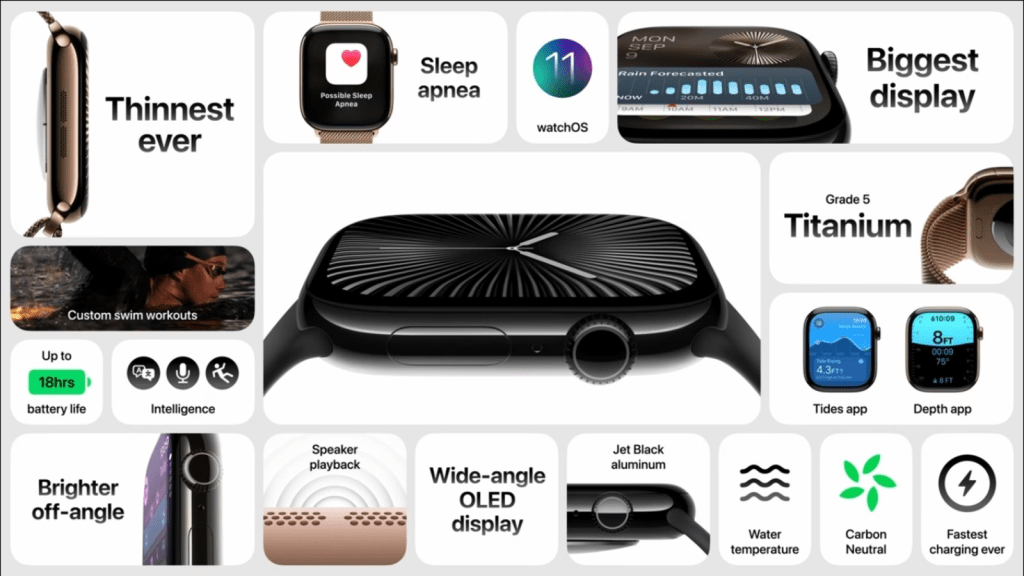
Apple’s latest standard wearable was supposed to receive a revolutionary update this year. Hailed as a “next generation” wearable by Forbes, Apple analyst Mark Gurman predicted that this watch would receive a major redesign. What did consumers receive? Merely a thickness reduction and larger screen. The design was the same as always, with its classic “squircle” shape and curved display. Whilst under the hood there were processing improvements and Apple gave the device slightly larger speakers, there was hardly any update which could be considered of paramount importance. The colour options were dull, with the exception of a new glossy aluminium “jet black,” and the new watch faces which came with it have been made available on older models. All in all, this was a pretty disappointing, incremental upgrade.
Alongside the Apple Watch Series 10, a new black titanium model of the pre-existing Apple Watch Ultra 2 was also released.
AirPods 4
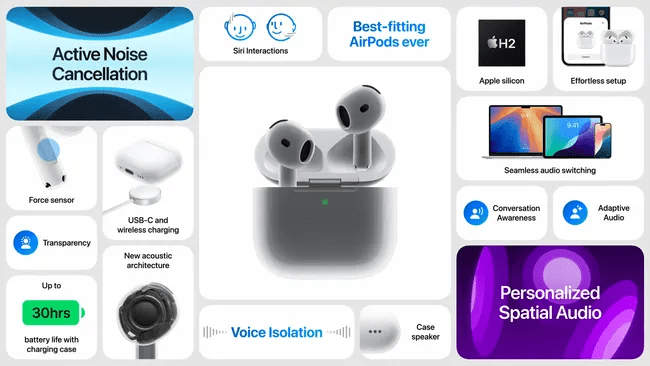
The AirPods models received a very interesting update, one that was much more significant than that of the Apple Watch. For starters, the base model AirPods 4 now come in 2 variations: with (£179) and without (£129) active noise cancellation. The design was updated so that they would fit better, hopefully causing less to be lost every year by falling out. The case now has USB-C and can be charged with an Apple Watch puck. AirPods can now recognise nodding and shaking gestures for answering and declining calls and are able to lower volume when in conversation. However, this was not what stole the show. Whilst the AirPods Pro and Max received no hardware update, a software update was released. They can now double as FDA-approved hearing aids for people with mild to moderate hearing loss problems. They also feature new hearing protection capabilities, meaning that the health of individuals going forward will not be impacted by wearing headphones.
iPhone 16 and 16 Pro
Apple’s flagship iPhone received a middling update this year, as the tech giant made the unfortunate mistake of following Microsoft and Google by exploiting it’s own AI, Apple Intelligence, of which many features actually rely on ChatGPT. Apple Intelligence is far from revolutionary, and most consumers will not use many of its features on a daily basis. In fact, many of its gimmicks, such as AI generated emojis (“Genmojis”), will not arrive until later this year. Apple’s main marketing tool was making the iPhone 16 and 16 Pro the first models “designed for Apple Intelligence from the ground up.” Unfortunately, this meant that there were far from many useful hardware features.
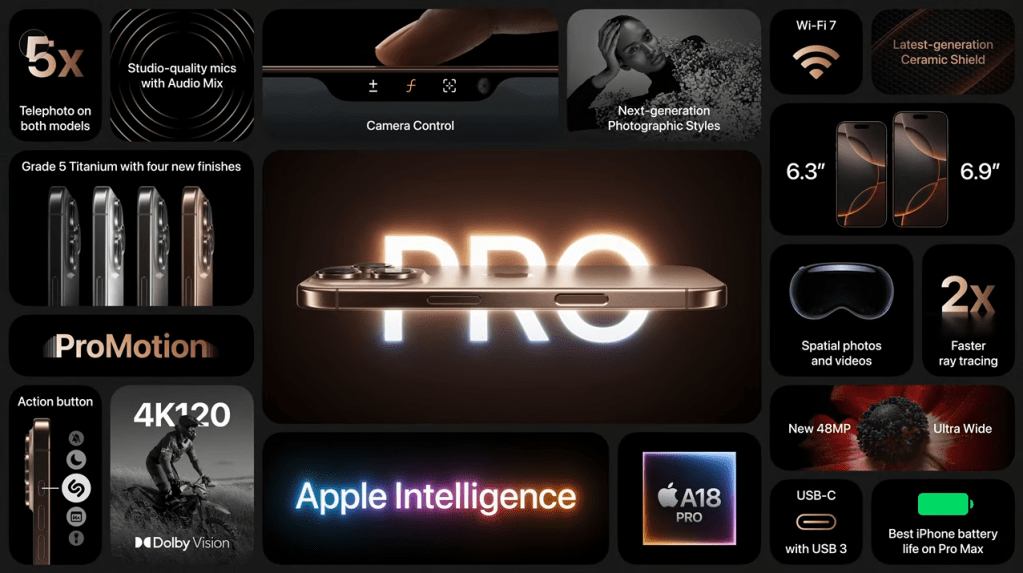
That being said, the regular iPhone 16 model did receive a fair few hardware updates, albeit ones which the iPhone 15 Pro had last year. It gained 2023’s action button, an updated A18 chip and a new “Camera Control” button on the side, which most people will find hard to use in portrait as it was designed for landscape. The camera layout on the back has reverted to a design similar to that of the iPhones X, 11 and 12, and the new colour options are much more vibrant. It also gained the ability to take spatial photos and videos, for the slim minority of people who would make the mistake of buying the first generation Apple Vision Pro with its extortionate pricing. However, the fact that this device still has a 60hz refresh rate in 2024 is appalling and the main reason why I would not recommend this phone to anyone who has the budget for it. A Google Pixel 9 or Samsung S24 would be a much better choice.
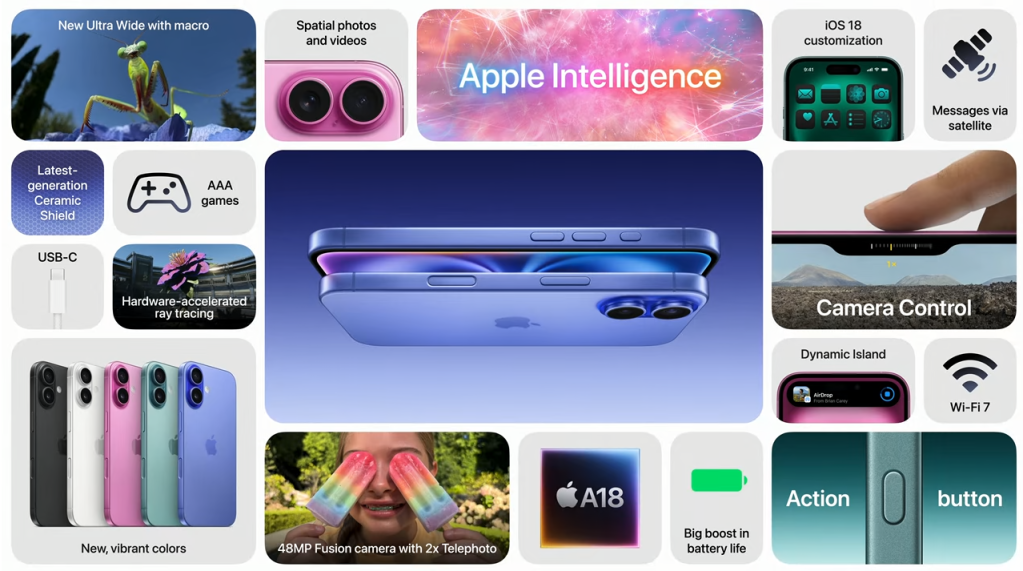
The iPhone 16 Pro, despite being one of the most impressive and recommendable phones on the market, had improvements from last year which were much more disappointing and purely incremental. Whilst it also gained the Camera Control button, fairly substantial camera improvements and, of course, Apple Intelligence, the only other major update was the size. The standard Pro display went from 6.1 to 6.3 inches, whilst the Pro Max went from 6.7 to 6.9 inches as the bezels shrunk. Nonetheless, despite no massive changes, the iPhone 16 Pro is an incredible phone which surpasses its predecessor in every way and outperforms its Google and Samsung counterparts.




 The 1509
Leave a comment