
By Spandan Sahu.
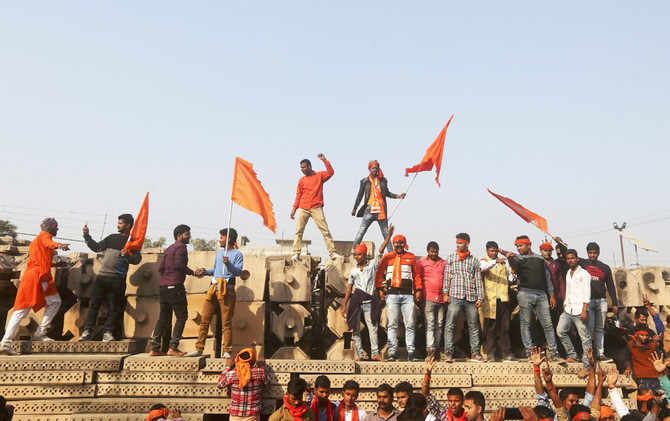
Mahatma Gandhi himself said that his religion was “based on truth and non-violence” – yet religious violence, perpetrated by Hindus, has historically caused and has the potential to cause much damage to the Muslim community in India, harming both the national economy and society.
It is evident that nationalist sentiment, propagated by the governing BJP party (headed by Prime Minister Narendra Modi), has pervaded much of India, and as a result, many Muslims are feeling the backlash from the increasingly extremist Hindu population.

Historically, it was the British who encouraged inter-caste and religious violence – exemplified in the 1947 partition of British India into India and Pakistan (East and West), with close to 3 million dead. The tragic consequences of this have left economic scars, still hindering progress today.
Demonizing minorities, especially Muslims (who are the second largest religious group after Hindus) in India has a plethora of consequences. Division between interconnected communities causes heavy losses to supply chains and markets – the Gujarat pogrom of 2002 led to £38 million of destruction, meaning that businesses incurred heavy losses, with many never recovering from the violence, inhibiting future growth.

This disruption has a clear consequence on the spending habits of people, as expenditure on many common goods and services are sacrificed to prioritise necessary goods (less than 500 rupees on average for those in cities), fearing violence to destroy their homes. This contraction in consumption diminishes aggregate demand, slowing down the growth of India as one of the best performing economies in the world.
Supply chains are disrupted through the arson of crop farms and other capital, driving up the cost of grain and further increasing transport costs. Consequently, aggregate supply is reduced as grain processing costs rise due to communal clashes in rural areas, increasing overall production costs and leading to avoidable inflationary pressures. Migration, often triggered by such violence, reduces productivity and the availability of human capital in local economies, exacerbating the economic impact.
This instability causes long-term consequences such as a lack of investment in businesses run by people from minority communities. Businesses may want to avoid building factories in areas with recurrent violence or Muslim populations to sidestep hiring Muslim workers. With Hindus increasingly avoiding doing business with Muslims, the overall potential of the economy is diminished, risking a brain drain. Skilled workers avoid working in an unsafe environment and would rather take a lower-paying job, contributing to underemployment and a loss of innovation.
Moreover, the reduction in social mobility not only limits access to education but also housing, as discriminatory practices entrench inequality. Many schoolchildren face prejudice from peers and teachers, while Hindu homeowners refuse to rent homes to Muslims. This refusal causes more demand for homes in Muslim communities, leading to rising home prices and both local and national inflation.

The south boasts a more integrated culture between the two faiths, exemplified by Kerala. The positive relationship between Hindus, Muslims, and their significant Christian population likely contributes to Kerala’s literacy rate of 94%, compared to Bihar’s 62%. This remarkable achievement highlights how social equilibrium can unlock economic potential; the benefits of literacy are seen in Kerala’s thriving economy. Similar progress can be seen in Bangalore, being dubbed the “Silicon Valley of India,” showing how integration supports innovation. Although correlation doesn’t necessitate causation, there is strong reason to believe that communal harmony has a role to play.

Martin Luther King said that nothing good ever comes from violence, and this holds true for the conflict we see in India. The clear economic backlash observed in violence-prone states can easily be avoided by a more inclusive mindset from the government and the people.


 The 1509
Leave a comment