

By Krish Lukha.
Summary: AI is slowly going to kill the World Wide Web. The omnipresent creation which has transformed the globe will not survive. In the near future, AI will abridge and explain everything. Case in point: Google Gemini. Eventually, AI will become autonomous, leaving the World Wide Web obsolete. Say your goodbyes.
Google just held their annual I/O event and as predicted, AI stole the show. The event was practically dedicated solely to Gemini, Google’s latest AI models. Google isn’t the first big tech giant to enter the AI race. In recent weeks, Meta, OpenAI, Microsoft and Apple have all mentioned this technology which will shape future civilisations. Even this week, Microsoft has just held its own event which integrated its own Copilot into the Surface keyboard and launched a new Copilot+ program, which relies on Open AI’s latest ChatGPT 4-o (where the “o” stands for “omni”) ; AI has once again been an integral part of yet another large tech event.
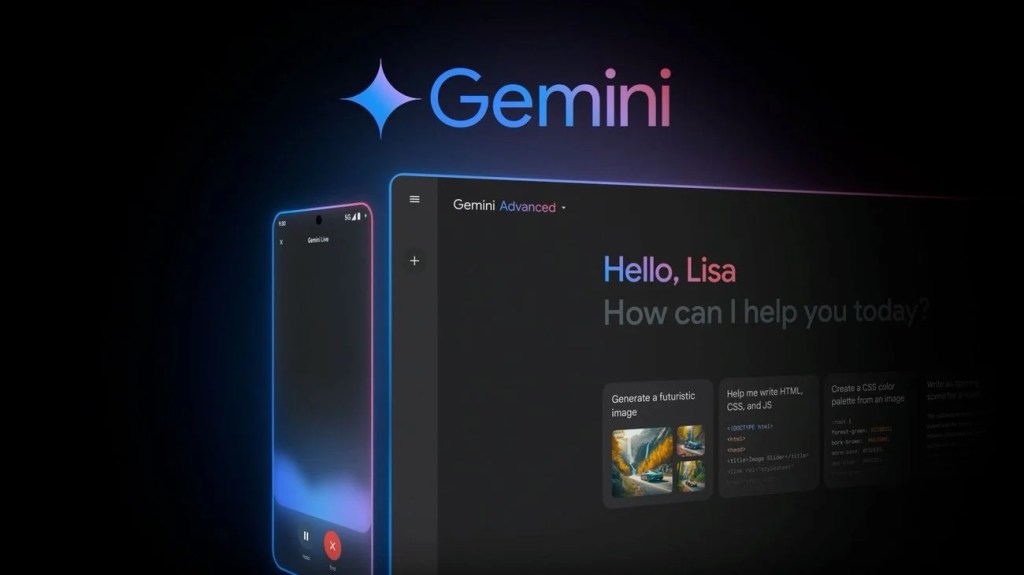
Google announced a new AI model to its ever-expanding lineup: Gemini 1.5 flash. This has the same amount of power as 1.5 Pro, however, Google states that it is optimised for “narrow, high-frequency, low-latency tasks.” It’s also rolling out 1.5 Pro to the masses in the sidebar for Docs, Slides, Drive, Gmail and Sheets. In a blatant attempt to copy OpenAI, it has also started to roll out a custom chatbot creator to Gemini Advanced Subscribers, which it calls “Gems;” these are clearly comparable to GPTs. They allow the user to give specific instructions as to how the AI should respond and specialise. Gemini Nano has been designed to use locally on phones. Moreover, as per usual, they also announced their latest improvements to Android OS with Android 15. The new Gemini Live will give a personality to the AI and will make it more like a conventional voice assistant. However, by far the biggest takeaways from Google are its visions for the future of web browsing and search engines: Project Astra and AI Overviews, both of which will heavily alter the ways in which we browse.

Astra is one of many Gemini related technologies shown off at Google i/o, alongside Veo, another AI which can generate videos from a text prompt. Recent AI gadgets include the Rabbit R1 and the Humane AI Pin. These have ultimately been sub-par, with slow response times and laggy software. However, Google has teased a much smoother experience with AI running on a pair of glasses. Project Astra is shown to be an “all seeing AI” (CNET) which has been heralded as the “future of AI assistants” by its maker. It’s supposed to be quick and conversational. When asked questions about the world around the user, it can easily explain how certain devices work, or locate where someone last placed their glasses. By simply answering questions, Project Astra (either on a phone or by utilising smart glasses) will allow the user to obtain their necessary answers far more quickly than the methods of today. It can solve maths problems directly from a whiteboard through a camera. It can recognise important historical landmarks and figures from mere sketches! Despite the demonstrations which seems to have captivated Google’s global audience, no-one knows for sure how exactly these will work. More news is expected to follow in the coming months.
2. AI Overviews: The Future of Searching
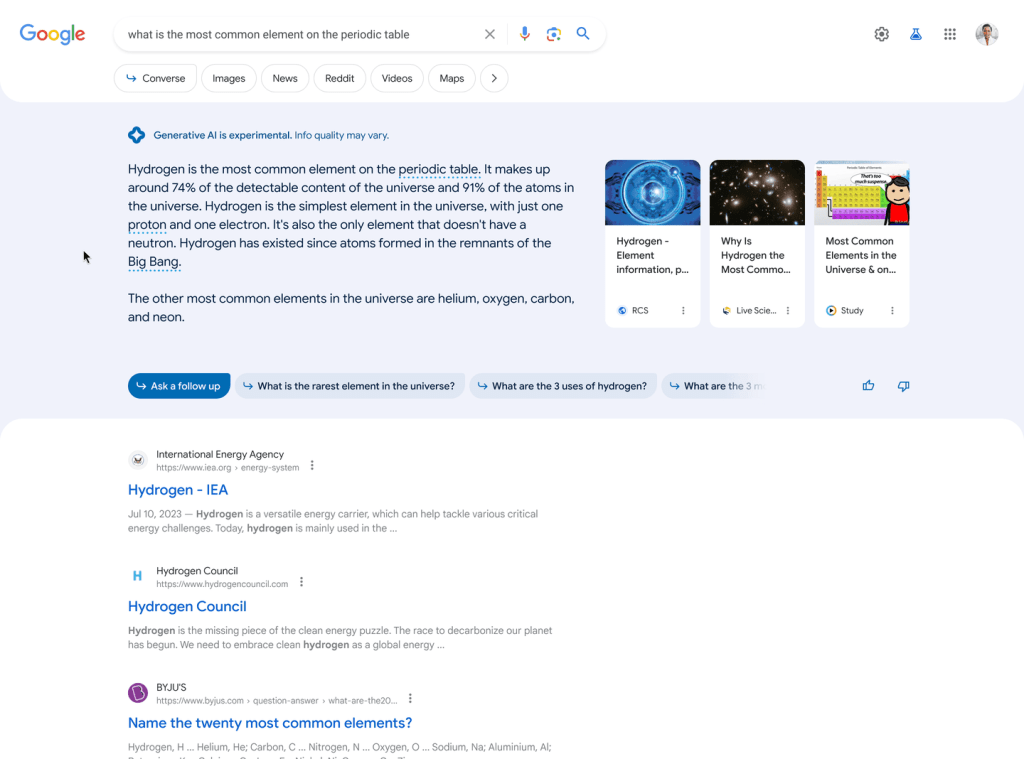
As of last week, Google has pushed out these latest features, which were previously available solely to experimental users, to the US. This will be rolled out to other countries at a later stage. It uses generative AI to curate a summary so as to save the user from searching through endless videos, images and websites. At the moment, the AI relies on the World Wide Web to provide it with all of the source material necessary to create a summary. However, eventually, AI will learn all of this information and Gemini will become autonomous, meaning that it will be able to give the user the necessary knowledge without having to rely on the World Wide Web. This utility which we have relied upon for decades will eventually become obsolete, leaving AI to assist with researching.
This idea of the Web slowly declining is far from novel. It has been a slow process which has taken place over years. Facebook, Instagram and other social media platforms have already diverted conversations and videos away from Google and into their own apps. This decline has just been accelerated by new tools such as Project Astra and AI Overviews. In the future, people will merely have to ask their glasses a question and, unlike with the voice assistants and chatbots of today, they will receive pure, factual answers which are succinct enough to meet their own, personalised requirements.




 The 1509
Leave a comment