

By Saad Ahmad.
Fundamentally, agriculture is about producing crops and livestock to feed people. Although this may seem simple enough, there is a wide range of ethical issues surrounding agriculture – from frequently debated topics like whether animals are kept in ethical conditions – to more subtle problems and general farm management.
Since cattle were first domesticated 10,000 years ago, farming has developed from a small-scale subsistence activity – to the present-day industrial process with international corporations running huge farms with the sole aim of maximising profit.
One hotly debated issue is the cruel treatment of farm animals. Many people, feeling uncomfortable with benefitting from animal suffering, decide to become vegetarian or vegan. But just how severe is this problem on our farms?
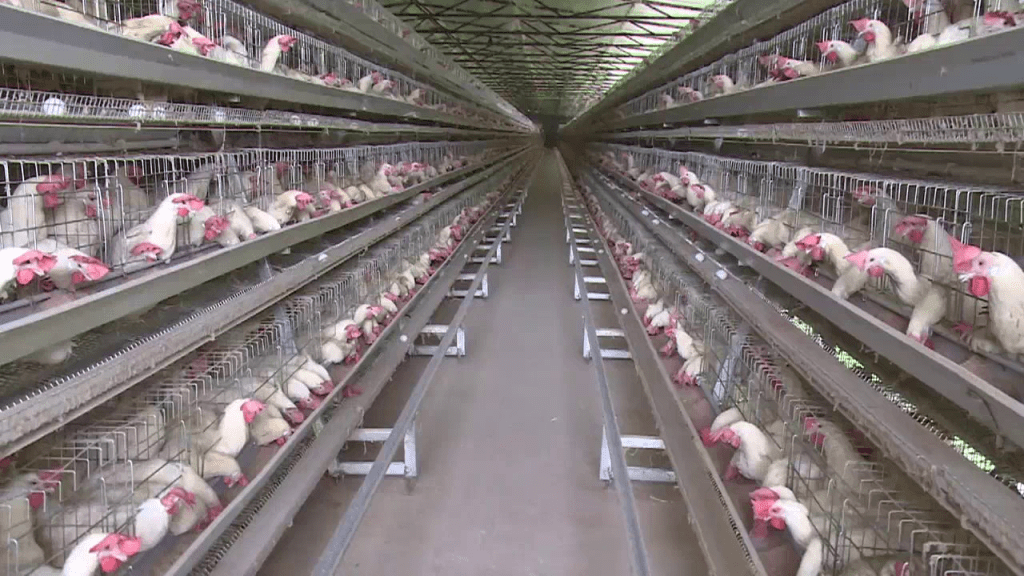
A battery chicken farm. Over 243 million hens are battery farmed in the US, 74% of the total.
Farming today is often an intensive procedure, with the number and density of animals maximised without regard for their wellbeing. This is done by sustaining animals with as low a cost as possible, frequently by stuffing them all together in a tiny space – with just enough air to keep them alive.
Because farm animals are concealed from the public eye – regulations are often ignored by corporations, as they know that they can undermine animal rights, without fear of consequence.
One way major companies subjugate their animals is by suppressing their natural traits. This can be through violence – physical harm – as well as through mental anguish, like denying them fresh air or being out in an open field. Many animals are also artificially impregnated multiple times – and mothers are frequently unable to spend any time at all with their offspring.
Although companies like to insist that they care for their animals, the inconsistency of official visits by regulators allows them to continue their ways without consequence.
This is exacerbated by excessive meat-consumption within society and an obsession with low prices. Many consumers are unprepared or unable to pay higher prices for meat, even if they oppose the mistreatment of animals. There is it often a conflict between cost and ethics.
Another issue which goes under the radar, is the mistreatment of workers.
Here in the UK not too long ago, one farm was discovered to be treating their workers similar to how factory farms treat their animals, with a prevalent culture of fear and intimidation. Being forced to work in dangerous weather conditions, such as extreme rain or heat led to workers fainting, often without sympathy or help from their superiors. There are reports workers not being paid properly for hours worked, who were afraid to speak out.
Overall, whilst meat delights the taste buds, I think something that should be at the front of our minds is if what we are eating was produced humanely.




 The 1509
Leave a comment