Politics affects most aspects of our daily lives, from education and healthcare to the environment and economy. With several major political parties vying for support, it can be difficult to keep track of who stands for what. This article will introduce you to the UK’s main political parties and their key ideas.

Labour: The party striving to stay in office
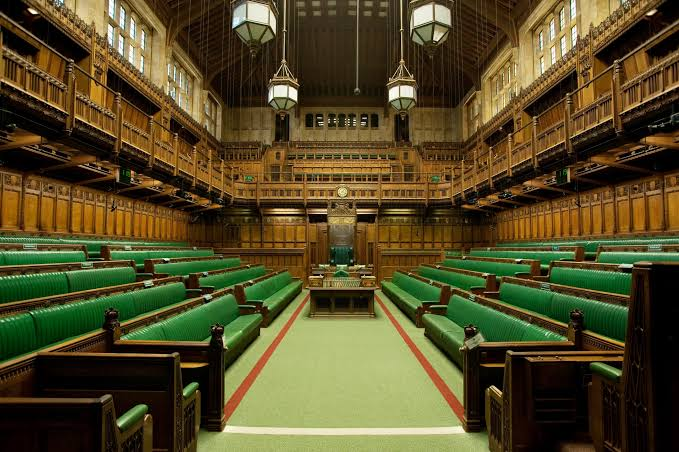
If politics were the premier league, Labour would currently be sitting at the top of the table. In the last General Election in 2024, Labour stormed to power with a landslide victory, winning 411 out of 650 seats in the House of Commons. Despite losing a handful of seats through by-elections, including Gorton and Denton (to the Green party) and Runcorn and Helsby (to Reform UK) – they still hold 403 seats, making them by far the largest party in the House of Commons.
Their current leader is Andy Burnham, following Keir Starmer’s resignation in July 2026 after his decline in popularity within the Labour party and increasing pressure from Reform UK and the Green party. For now, Labour seems to have recovered, with a recent surge in popularity known as the ‘Burnham Bounce’. They are currently projected to win 241-288 Seats according to several polls. The Labour party sits on the Centre-left of the political spectrum and is known for policies it claims will reduce inequality: supporting workers’ rights, higher funding for public services like the NHS, and the nationalisation of industries like British Steel. Most recently, after their 2026 party conference, Labour seem to support the idea of closer ties with Europe.
The Conservative Party: Trying to find its place in today’s world

The Conservative and Unionist Party (also known as the Tory party) are currently the major opposition party in Parliament. After spending 14 years in government, the party suffered a dramatic defeat in the 2024 General Election, winning only 121 seats in the House of Commons. Political commentators attribute blame for the scale of the defeat to the high prime ministerial turnover rate – 3, Boris Johnson, Liz Truss, and Rishi Sunak, in just 5 years – which left voters feeling frustrated and desperate for change. (Change which happened to be in Labour’s 2024 manifesto!)
Their current leader is Kemi Badenoch, who took over from Rishi Sunak following the 2024 electoral defeat. Since then, the Conservatives have faced strong competition from other right wing parties like Reform UK, and more recently Restore Britian. Recent polls suggest they will overtake Reform UK, but vary wildly, with estimates ranging from 85-165 seats. The Conservatives are generally considered a right-wing party and are known for supporting free enterprise, lower taxes, strong national security, and Brexit.
The Liberal Democrats – jet-skiing into the middle ground

The Liberal Democrats are currently the third largest party in the House of Commons, holding 71 Seats, after gaining an impressive 64 seats in the 2024 General Election. This was their best result in over a century and came after winning many historically Conservative constituencies in what is now referred to as “the breaking of the blue wall”.
Sir Ed Davey has been their leader since 2020. He became well known during the 2024 election campaign for a series of attention-grabbing stunts (bungee jumps and jet skiing to name a few). The Lib Dems have remained relatively stable in the polls and are currently projected to win around 61-71 seats. The party is generally considered to be centrist and supports policies such as protecting civil liberties, strengthening democracy, improving public services, and rejoining the EU.
Reform UK: Nigel Farage’s latest invention

Reform UK is the latest in a series of far right UK political parties led by Nigel Farage, and has been one of the biggest political success stories of recent years. Despite holding just five seats in Parliament, the party surged in popularity after the 2024 General Election and spent over a year leading many opinion polls, until the Burnham Bounce and a Conservative resurgence put them at second or third place. They are currently projected to win between 84-153 seats.
The party is broadly considered a far-right party and is known for supporting tough immigration policies, a stronger focus on national sovereignty, reducing public spending and the removal of all Net Zero targets.
The Green Party: the climate campaigners

The Green party is one of the smaller parties in Parliament, holding four seats in the House of Commons. They achieved their best General Election result in 2024, gaining three additional MPs.
The party is led by Zack Polanski, who has encouraged the party to position themselves to the left of Labour. This left-wing stance, added to their well-known environmental protectionist roots has seen them grow in popularity in recent years. Like Reform UK, the Greens enjoyed a surge in support in the opinion polls before Labour’s recent recovery under Andy Burnham. However, they are still projected to win between 3-9 seats. The Green party supports stronger action on climate change, investment in renewable energy, environmentally friendly housing, greater taxation on the wealthy and closer ties with Europe.
Restore Britain: Reform’s challengers

Restore Britain was founded by Rupert Lowe (previously a Reform MP for Great Yarmouth) in 2025 following a high-profile row with Nigel Farage. The party is in its early stages and currently has only one seat in the House of Commons.
While it has never contested a General Election, pollsters already predict it will have an outsized impact on the next election, by fracturing the right wing vote. Restore Britain remains a relatively small force in UK politics and is currently projected to win one seat.
The party is far-right wing and supports policies such as strict immigration controls, traditionalist social policies, and ending the UK’s Net Zero commitments.
The Scottish National Party: fighting for an independent Scotland

The Scottish National Party (SNP) has dominated Scottish politics for the majority of the last two decades, but the 2024 General Election brought their worst result since 2010. The party won only nine seats, with many of its former strongholds being won by Labour and the Liberal Democrats. This decline followed a difficult period marked by many scandals under previous SNP leader and First Minister, Nicola Sturgeon.
The SNP is led by John Swinney, who previously served as party leader between 2000 and 2004 and is also Scotland’s First Minister. Despite its disappointing 2024 result, the party remains the dominant force in the Scottish Parliament and is projected to win between 18-40 seats in 2029. The SNP’s main goal is achieving Scottish Independence. The party also supports closer ties with Europe and rejoining the EU and ambitious environmental policies aimed at reaching Net Zero.
Plaid Cymru: Change first, Welsh independence second

Plaid Cymru, Wales’s nationalist party, achieved its best ever General Election result in 2024, winning four seats in the House of Commons. Their leader is Rhun ap Iorwerth, who is also First Minister of Wales. While Plaid Cymru remains much smaller than Labour or the Conservatives across the UK, it plays an important role in Welsh politics.
The party is currently polling in the region of 7-15 Seats and has fewer major challengers in many of its strongest areas of support. Plaid Cymru’s ultimate aim is Welsh independence, but at present, it is concentrating on securing greater devolutionary powers from Westminster. The party also supports closer ties with Europe, eventually rejoining the European Union and ambitious environmental policies.
Polling Trends

UK Political Map

A link to the full article and interactive map
Andy Burnham

Kemi Badenoch

Ed Davey

Nigel Farage

Zack Polanski

Rupert Lowe

John Swinney

Rhun ap Iorwerth


Leave a Reply