
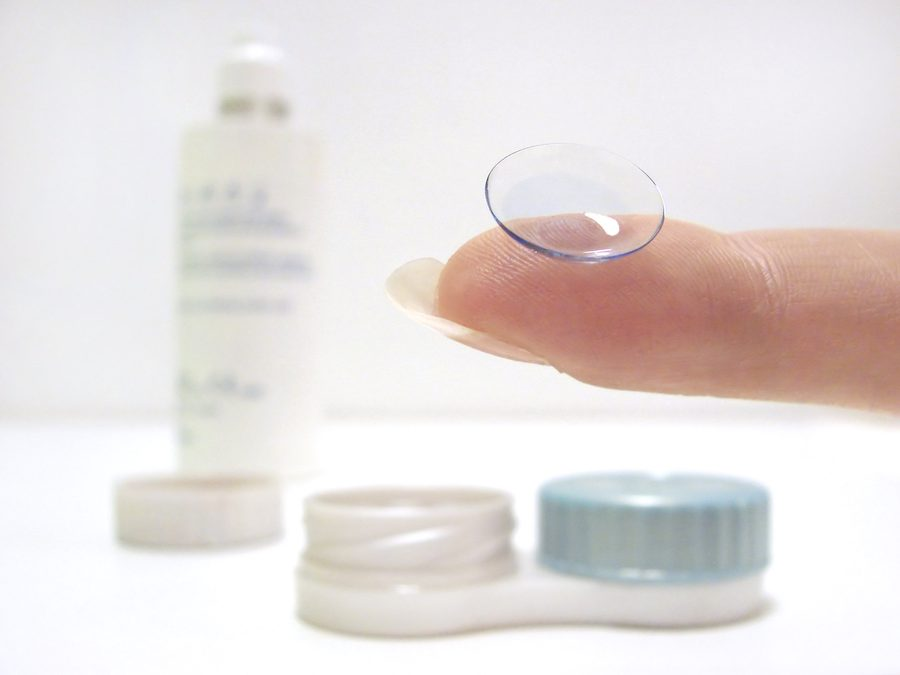
The Czech Republic. A country with a population of a little over 10.9 million people that seems so insignificant, yet its seemingly small invention serves over 140 million people daily. This is story of Otto Wichterle and how his contact lenses changed the world forever.

Otto, who was born on October 27, 1913 as the youngest to 5 children in Prostějov (in the then Austro-Hungarian empire), attended the Czech Technical University in Prague, where he was able to complete a doctoral thesis in chemistry in 1939, before he was not allowed to continue after Germany seized Czechoslovakia.
Despite reports that German forces were arresting university professors, Otto continued his research at the Bata Chemical Institute in Zlín, where he developed a method to aid in textile production. After the end of World War 2, Otto returned to the Czech Technical University and became a professor of macromolecular chemistry in 1949.
In 1952, While working in Prague’s University of Chemical Technology, Otto came up with the idea of using plastics that could hold water (or hydrophilic polymers, for the future scientists reading this article!) for human tissue. Otto then filed a patent on this type of plastic, which he then used to design the first soft contact lens.
Over the following years, and after many patents and rigorous testing of various prototypes on live patients, Otto was able to partner with an American investment company and was given a licence in 1966, which allowed him to produce the lenses. Finally, in 1971, soft contact lenses were made purchasable in America, despite the restrictions of Otto’s scientific research by the government in Czechoslovakia.

Today, contact lenses serve as a widespread alternative to glasses, that you won’t have to take off when you are playing sports where glasses can hinder you and can even fall and break. With over 9 percent of the UK population reliant on contact lenses to see properly in their day-to-day lives (meaning that you probably know a few pupils at this school that use contact lenses…) I certainly can’t imagine a world without contact lenses – not that wearing glasses is bad, I simply find that they are a more effective alterative to wearing glasses!
So, next time you put on your contact lenses in the morning before school, or see any of your friends wearing them, just remember that without this largely unrecognised Czech inventor, seamless vision without glasses wouldn’t be possible.


Leave a Reply