Throughout the summer, millions of people worldwide were captivated by the thrilling adventures of Odysseus, in his struggle to return home to his cherished land of Ithaca, after the conquering of the Trojans as a result of a brutal ten-year war. However, a question many may have asked is: ‘Where did these events actually take place?’
Troy
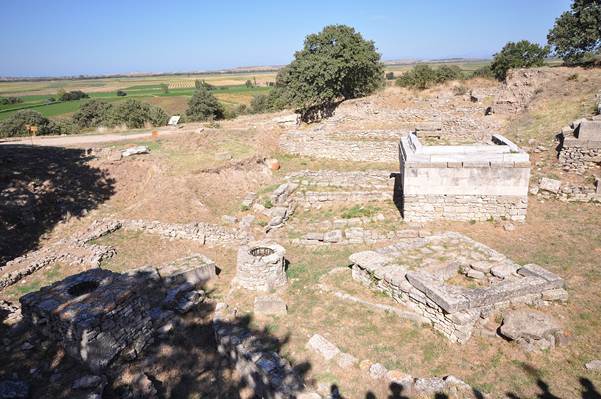
One of the largest mysteries about the Odyssey is the true location of the place where it began, Troy, which is recounted by Odysseus as being brutally sacked, causing the collapse of a strong 1500-year-old city. Located at the edges of western modern-day Turkey sits what is believed to be the site of the ruins. Thankfully, such ruins have not been left unprotected and disregarded, as they have now become a UNESCO site.

The Island of Polyphemus
Early in the story, Odysseus and his men sail to an island, seeking food for their journey and to meet the inhabitants, but unexpectedly encounter the Cyclops Polyphemus, who kills many of his dear comrades. In real life, this island is commonly associated with Sicily by many Ancient Greek historians, such as the 5th century BC historian, Thucydides.
Circe’s Island
After escaping Polyphemus, Odysseus and his remaining men stop at Aeaea, home to the witch Circe, who horrifically transforms them into pigs. The most prominent belief is that it was situated at the west-coast of Italy, south of Rome, in a place called Mount Circeo. This was supported by the epic 3rd century BC poet, Apollonius of Rhodes.

Calypso’s Island
However, more misfortune awaited Odysseus after leaving Circe’s island. After his comrades eat the sacred cows of Helios, Zeus drives the unfortunate men into a ferocious storm, killing every one of them, bar Odysseus, who is stranded at an island called Ogygia. However, unlike the other islands from this tale, Ogygia is believed to not exist, with no archaeological evidence. Despite this, there are many islands which are thought to have influenced the writing of Homer. A key contender is the island of Gozo, now a part of Malta, which even has tried to strengthen its claim by calling one place “Calypso’s Cave”, named after where Circe may have helped Odysseus seek refuge.
Ithaca
Nearing the end of the story of the Odyssey, the protagonist finally reaches his home: the land of Ithica, where he was king, before the Trojan War, showing the triumphant endurance of Odysseus. He eventually manages to recover his throne after a fierce contest with suitors to his wife Penelope. In reality, the island of Ithaca indeed exists, a lush green, steep, rugged landscape, a location where one may imagine Odysseus living in, during the Mycenaean Era. However, at the same time, Homer had described the island as being low-lying, meaning it may instead have been located on the nearby island of Kefalonia, as theorised by numerous scholars, including Robert Bittlestone, leaving, for now, the true presence of Ithica sadly unknown.

Overall, due to the lengthy distance of time, some of the true locations of the epic tale of the Odyssey have been lost to history, but through the work of some historians, both ancient and modern, a framework of the locations of the Odyssey has been formed.




Leave a Reply